
I was lucky enough to meet Ed from Standish Gatehouse recently, and to visit the amazing space he’s created there. One of many local delights we’re still discovering after moving to Stroud.
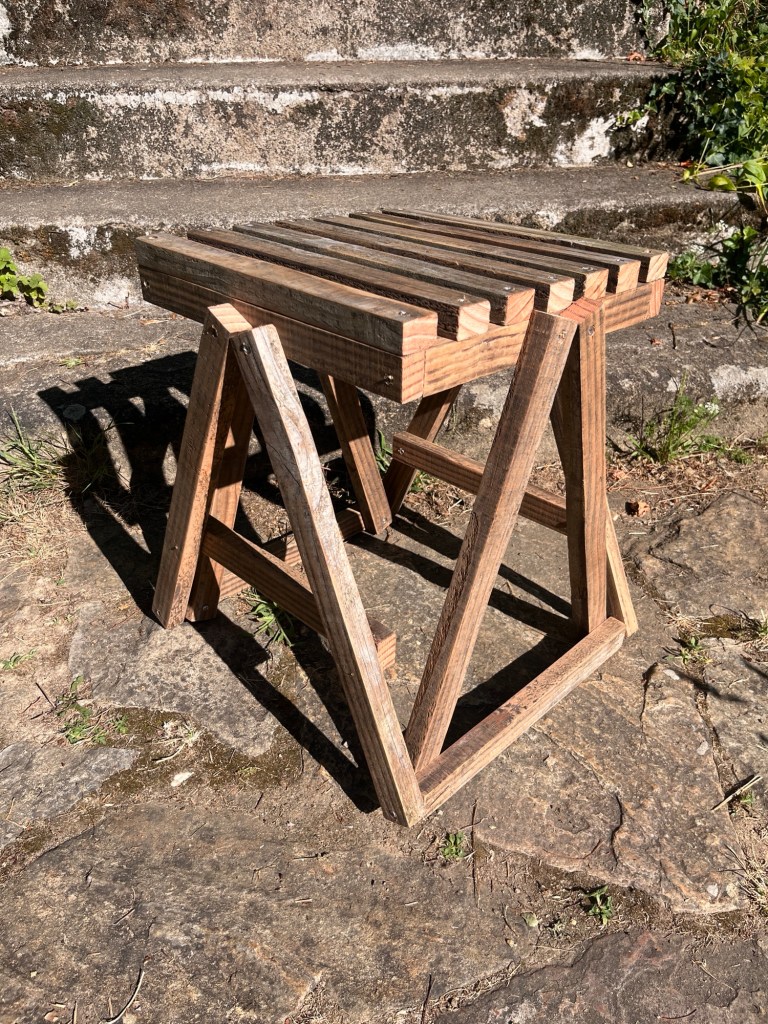
While there, I spotted this lovely little stool which struck me as a bit Enzo Mari, Autoprogettazione-ish in its design.
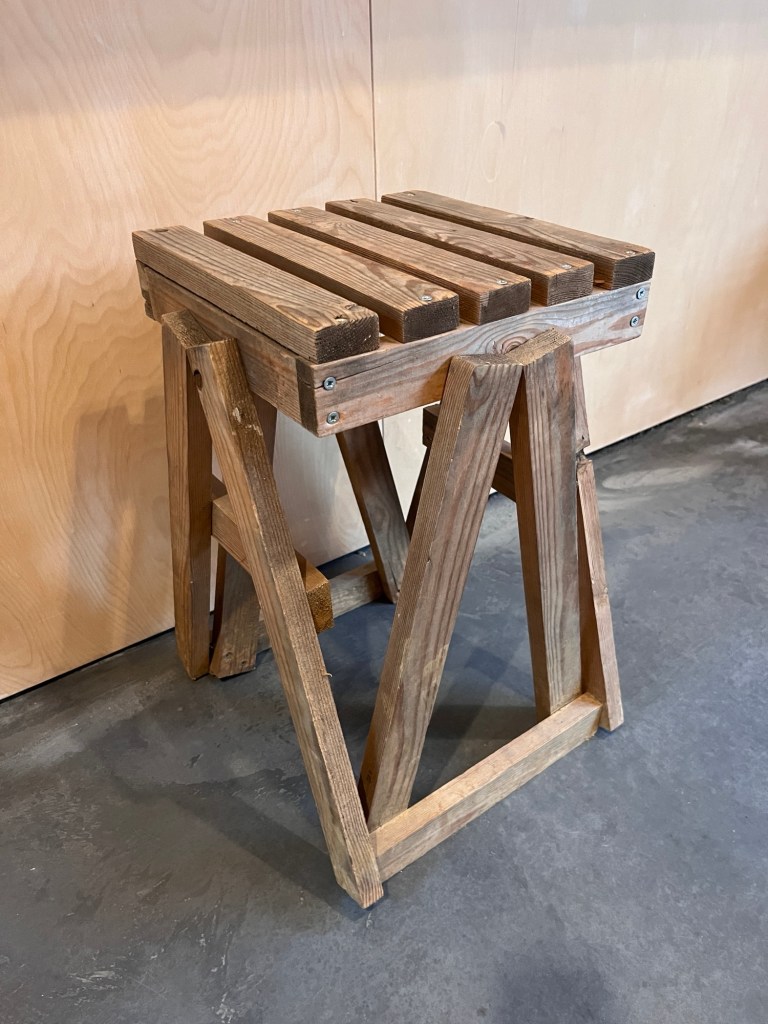
Ed confirmed that it was built in a workshop project using left over lengths of wood, so very Enzo, and very me. I just love thrifty and clever projects like these, especially when they end up creating such handsome objects from so little.
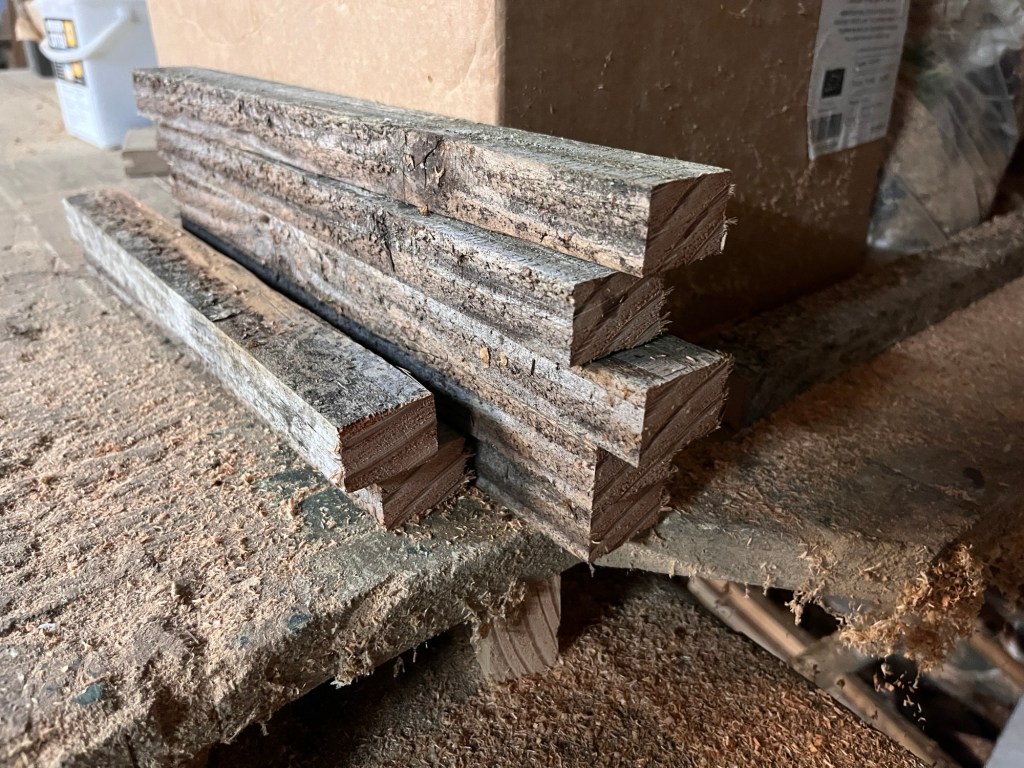
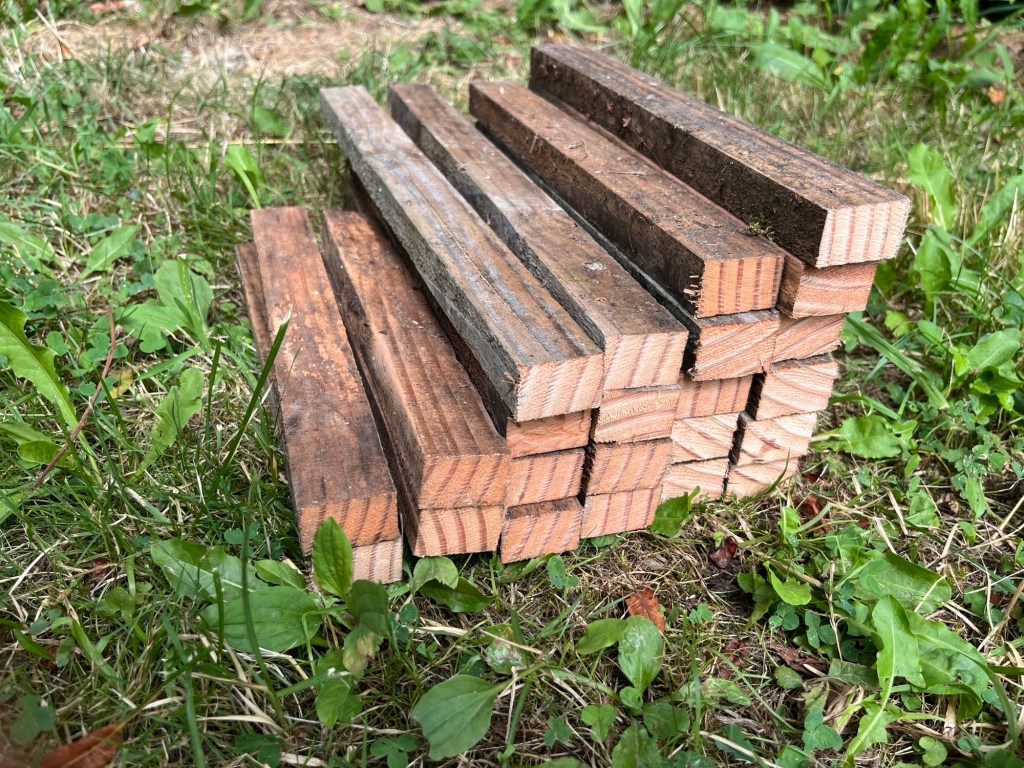
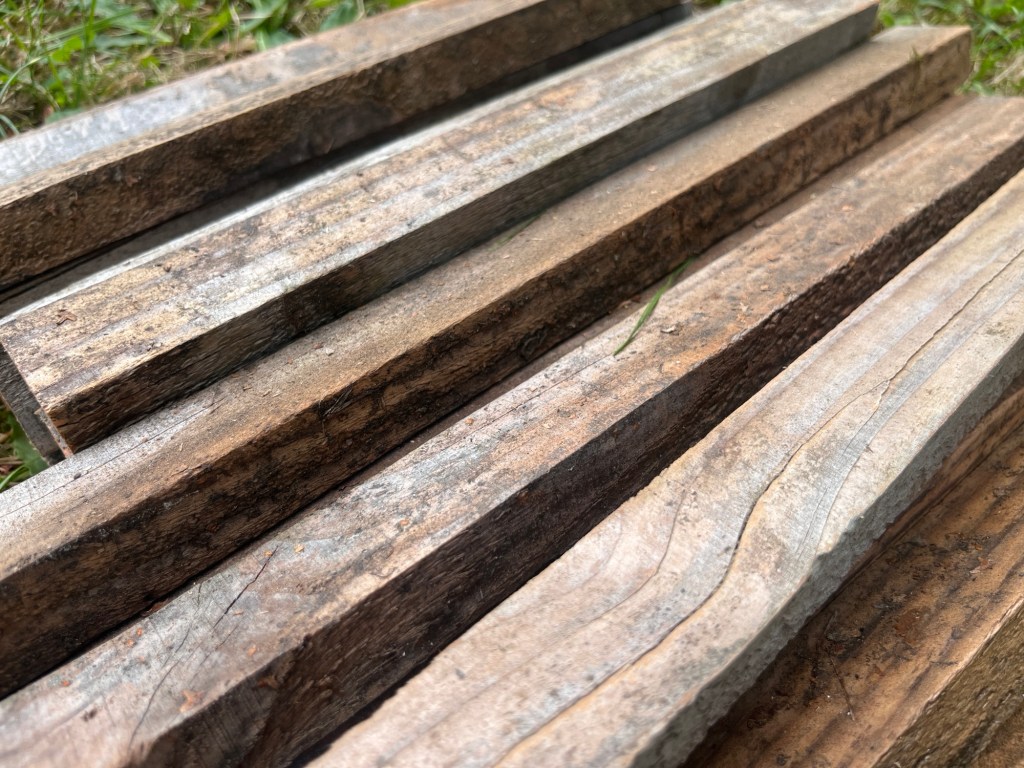
I kept looking at this photo and decided I wanted to try and build one for myself, using my own random offcuts of roofing batten. Douglas fir that’s been sitting outside for three years (Douglas is good for that sort of thing so long as it’s not sitting in water). Here’s what I dug out.

Some deliberately wonky bits that I can’t imagine being useful for much else (yet the sort of material I can never just throw away).
The detail about Ed’s design that hit me most was its seemingly very minimal lost of ingredients. One type of wood and from what I can tell, just three slightly different lengths of it. Add some screws and, boom! A stool. A super simple furniture system.

I didn’t know exact dimensions so I based my stool off a rough height of 45cm and width of 35cm. I lined it up, gauged the dimensions and adjusted the design as I cut. Then experimented with some off cuts to see how they’d take the screws I had to hand. That resulted in a collection of wood that I roughly sanded and got ready to assemble.

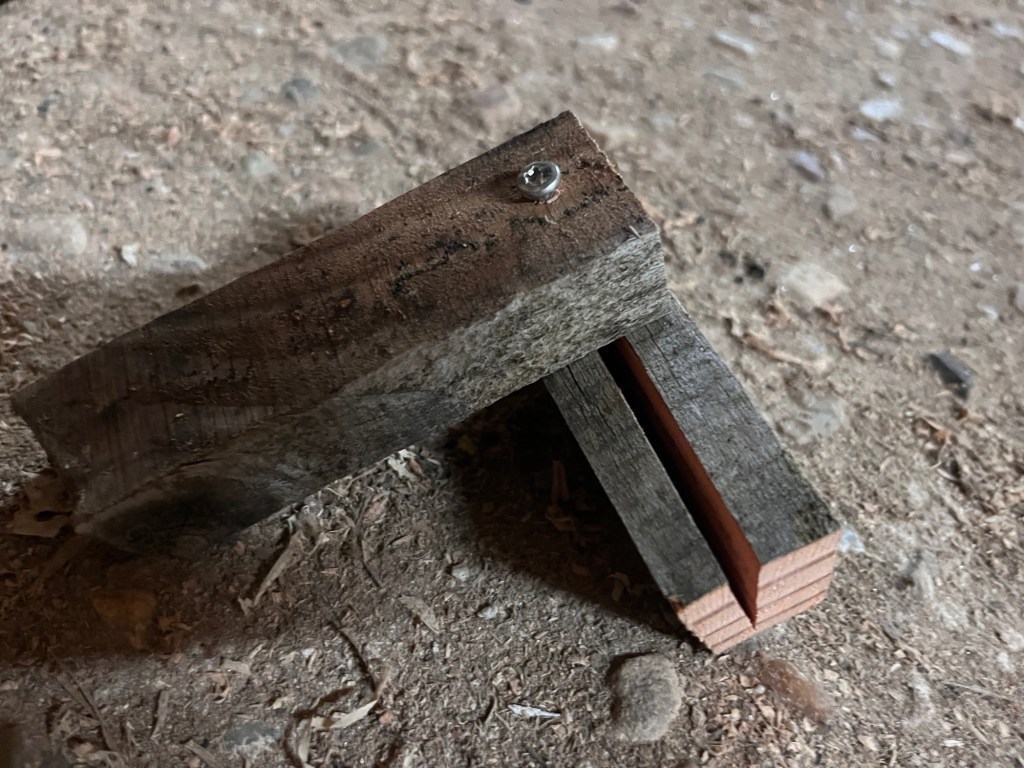
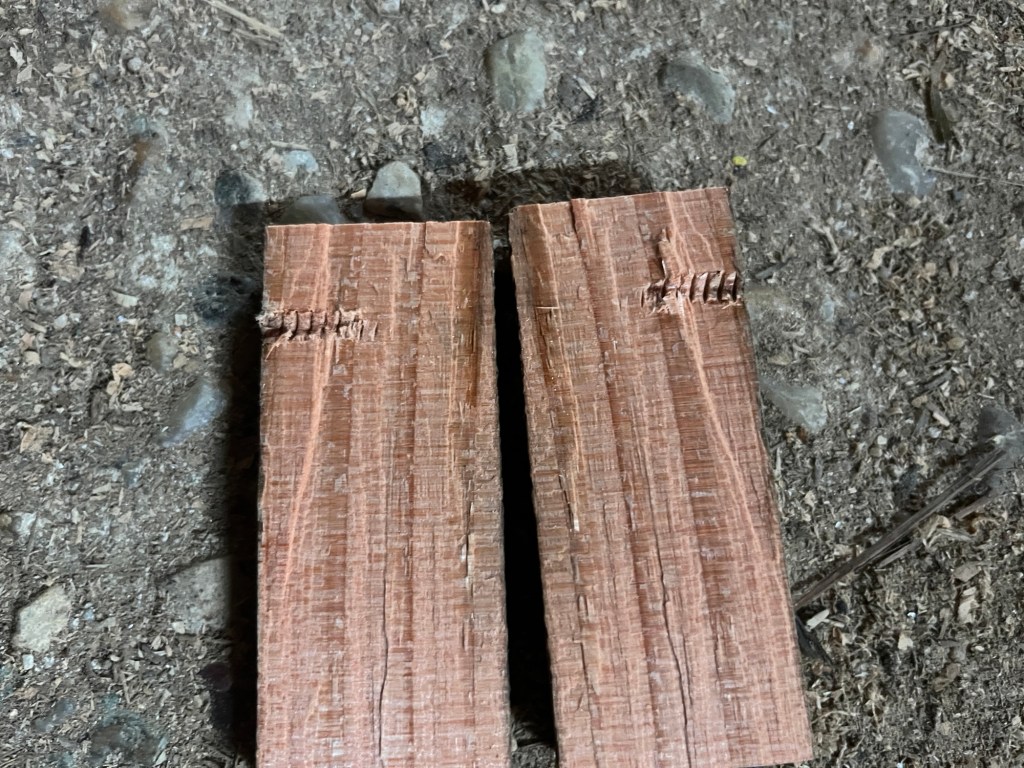

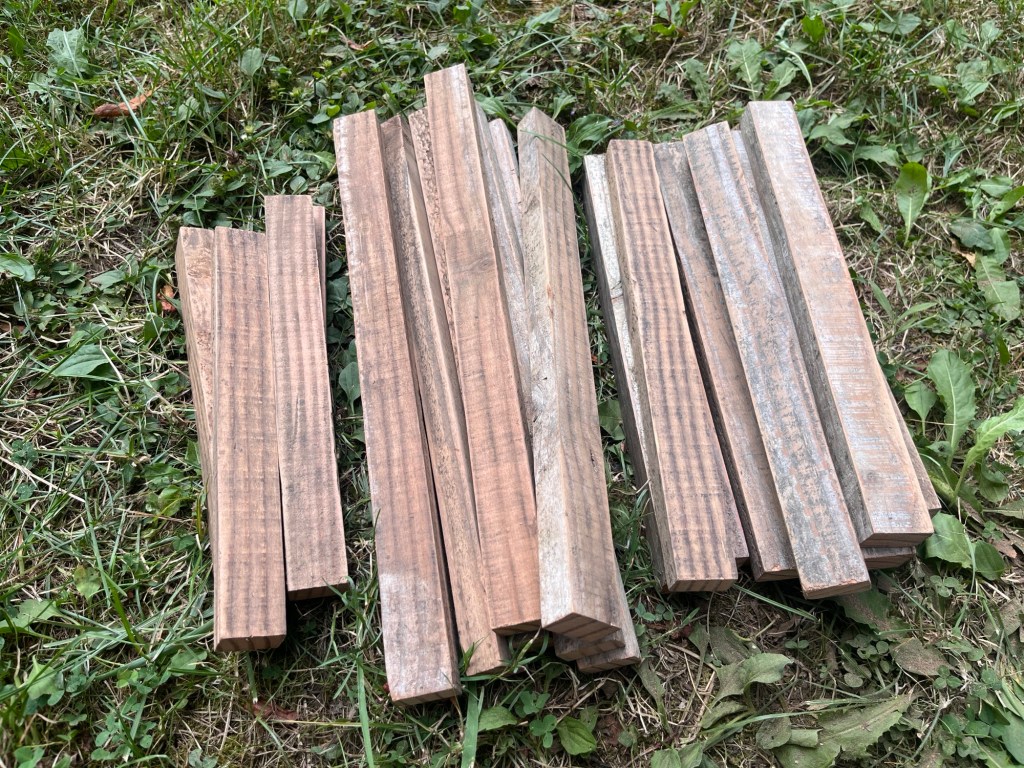
The screw test taught me that I needed to pre-drill the screw holes to prevent the thin battens from cleaving. By this point I had realised my full list of ingredients / materials, tools, and the design and build system required.
- Lengths of batten
- Tape measure
- Wood cutting tool
- Drill
- Drill bit
- Screws
I wanted this project to be an experiment and a bit of fun, plus I liked the idea that this type of stool shouldn’t be perfect. So, in less than an hour of fiddling (and having to change the drill bit and screw bit over and over as I’ve only got one drill) I figured things out.
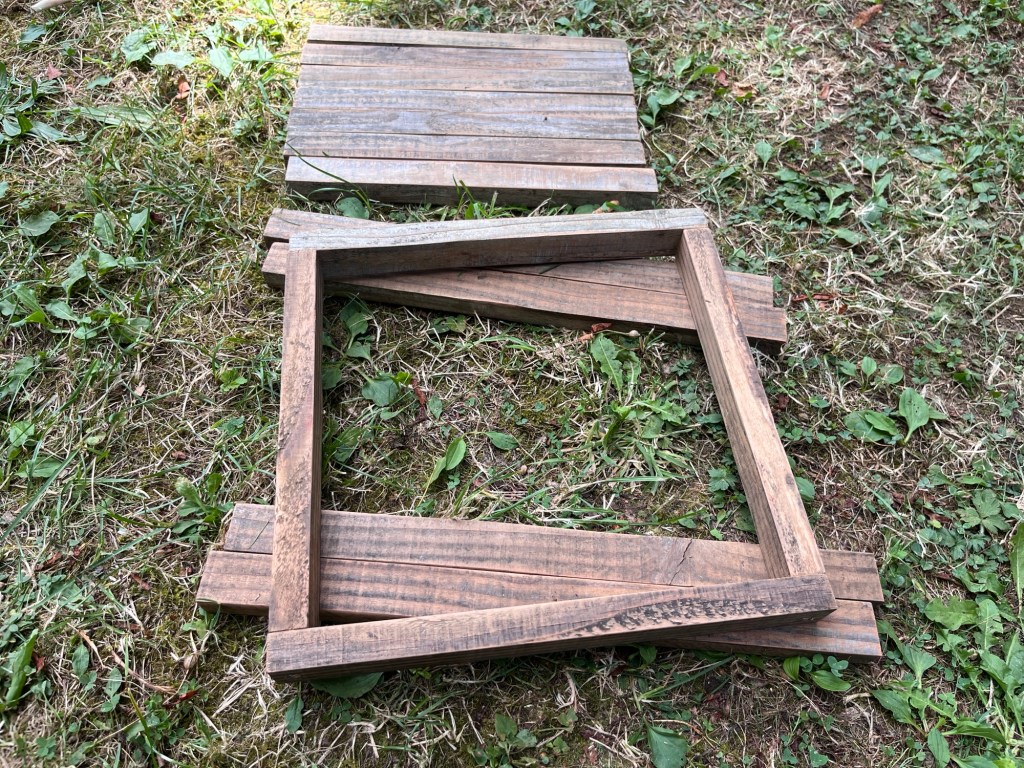

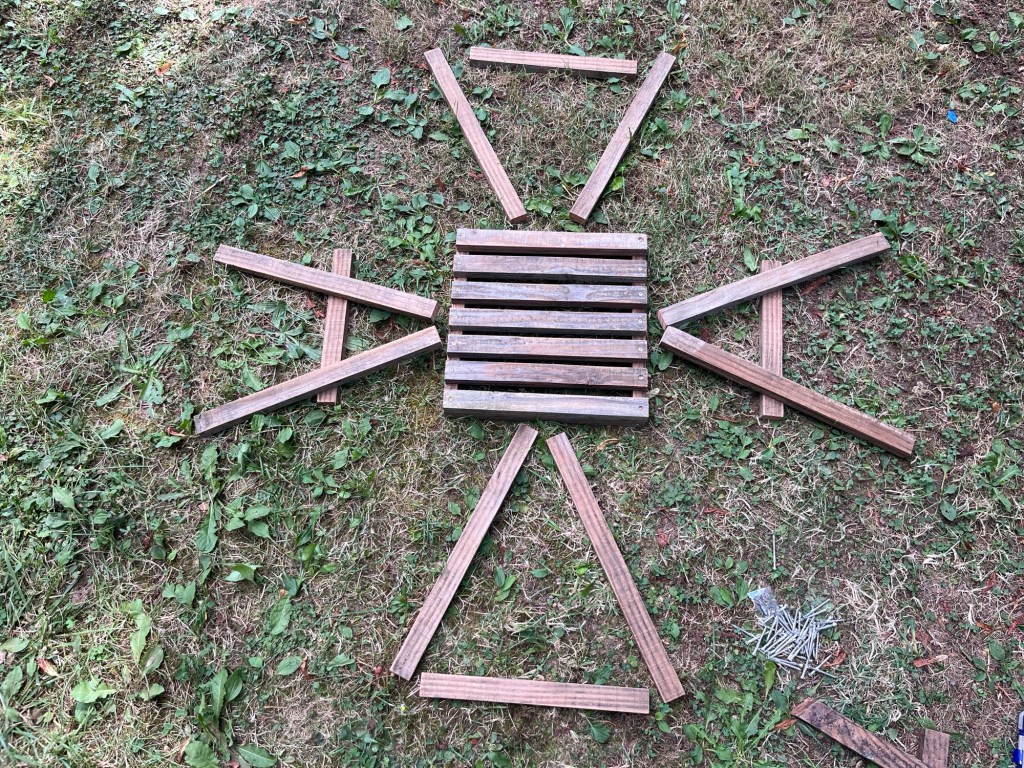

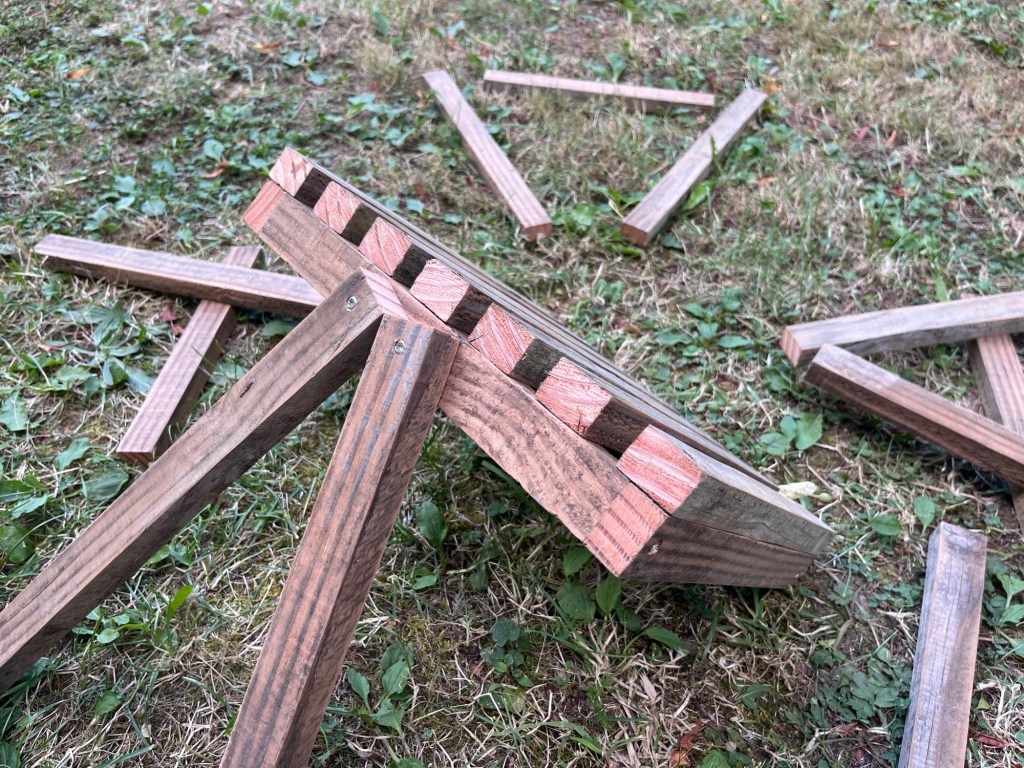
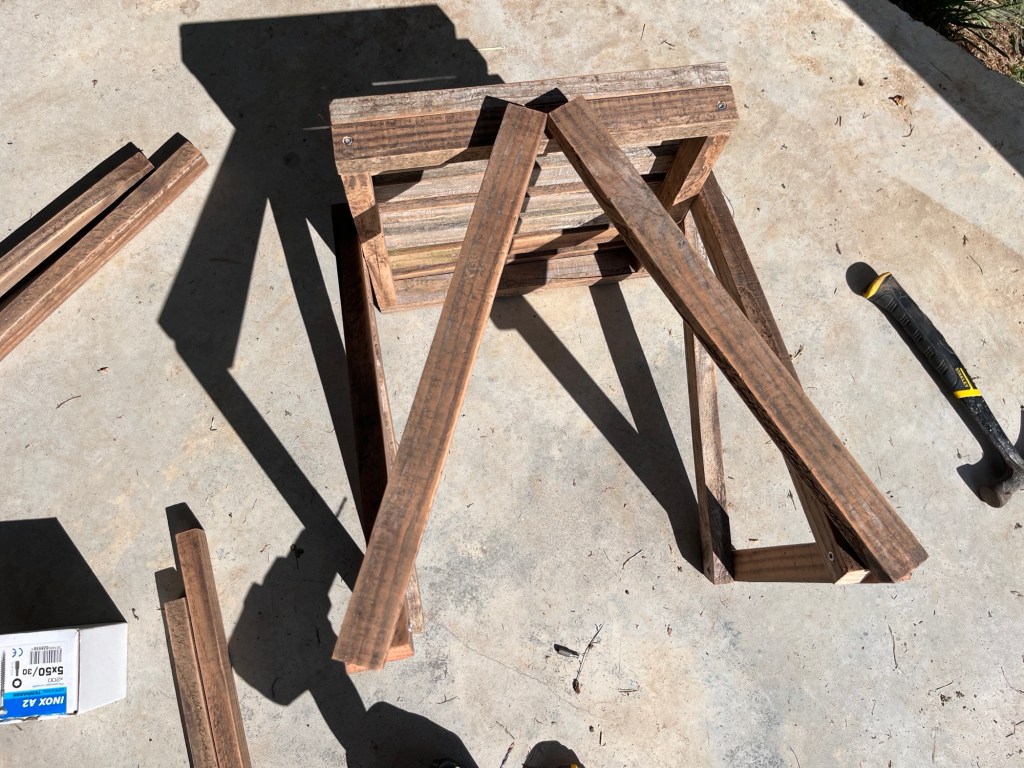
After dropping the drill twice and breaking two of the necessarily thin drill bits (and amazingly finding a rusty third one in a pot), and once I moved to a flat surface to try and eye a roughly level seat, I was done.
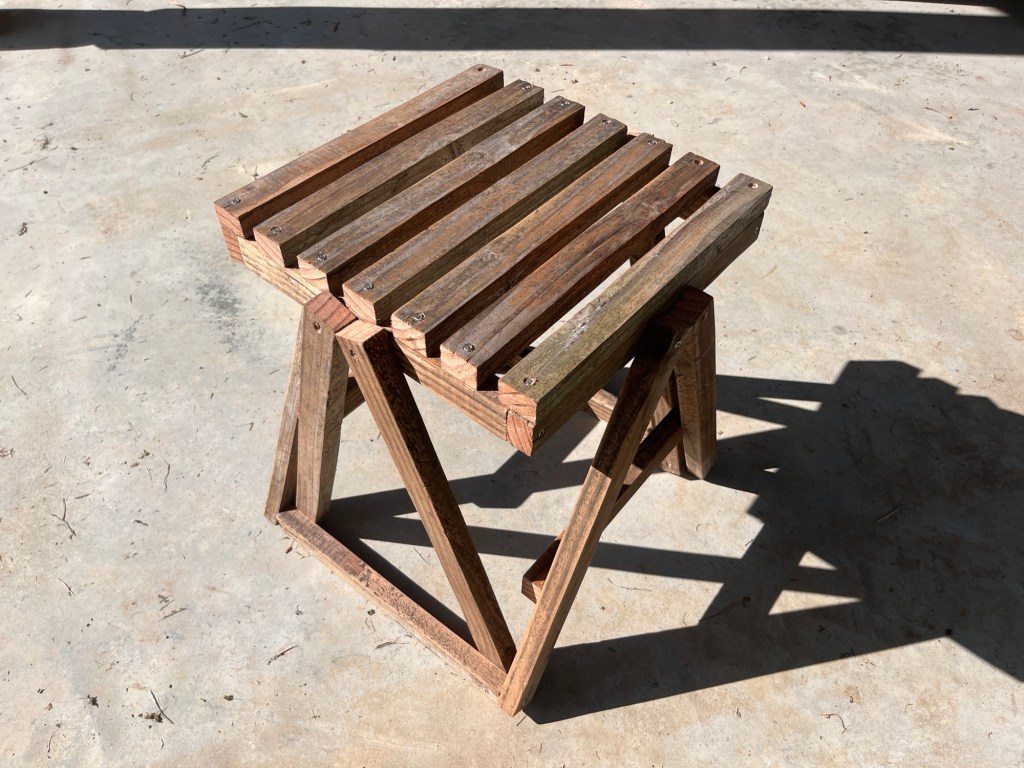
And I think it’s ace.
I’d love to make more. Tweak it. Perfect it. Turn the method into a system. Share it. Try my own workshop version. Use it as a metaphor to teach about design and iteration.
This is a long time old idea though and sometime I think I’m closer than ever to making a priority (using discarded furniture in particular as a lens though which to teach about creativity, design, manufacturing, business, branding, sustainability, psychology, philosophy and self help).
Also, the project has made me think more about how everything becomes a system in some way. And how this is both a good and bad thing. Anyway.
Anyone fancy making a stool with me?
 Mathew Wilson – Documenteering