
21 September, last Saturday, was Papercamp 3. An event I would define as: ‘a conference that deeply inspires and entertains, by looking backwards and forwards at the effects and lasting influence of paper and printed media.’
It was a brilliant day, and struck so many chords that I’ve been struggling to gather my thoughts and prevent infinite rabbit holes of further research. Every speaker introduced me to new ideas and angles on design – and in my opinion – human nature and psychology.
Rather than finishing my notes (and rabbit holes) and posting one massive report, I’m going to split them up a bit and post in chunks. Here then, part 1 of a few.
Introduction — From organiser Alex (Alexandra Deschamps-Sonsino)
- The history of Papercamp and its origins with Interesting.
- The liminal nature of paper and printed matter. I’ve not thought that before. I like it.
- The archivist nature of paper vs digital. How many digital records have we already lost?
- How paper was (is) at the heart of communication for that reason.
Echoes on Paper: Archival Treasures and Their Stories — Harlynn Homan talking about the Black Cultural Archives‘ paper-based materials
- Paper is resilient and holds emotion.
- Amazing stories of how materials are found and saved.
- New Society, Grass Roots, Fowaad and Owaad publications.
- Finding snakes in among old boxes!
- Though more often mould and red rust.
- Insights on the appraisal process.
- The role of saying what is worth saving. What remains in the archive.
- Examples of how paper holds truth, if you can find it, while the internet spreads falsehoods and errors without restraint.
- Made me think how Orwell’s Ministry of Truth changed facts to their liking on paper, when in reality paper can be our best source of truth. The internet as a Ministry of Truth!
- Much of what Harlynn talked about had me thinking deeply about archives and the challenges of looking after them and making them accessible.
- Also that archives can get too big for anyone or any groups to hold in mind. They need to be stirred up and revisited.
- Information in them needs to be repeated. If it’s in an archive it doesn’t mean it’s well known. An archive has to be alive. Each new set of eyes stirs new ideas and influences.
Left me thinking: How do we make those decisions about what to save and archive and what not to. Drawing that line between valuable and not. The thought that an archivist holds so much power in a way, again in a Ministry of Truth fashion, and so much responsibility. The value of paper in archives, while perhaps obvious, was really hit home for me with this talk and has influenced thoughts (both good and doubtful) about my own recent little archival project.
Robot handwriting & AI assisted journaling — Dan Catt
- Dan has ‘Kitty’, his AI that writes his notes in his handwriting using plotters, and that supports his memory and aids his awareness of his practice.
- A slightly mind blowing use of AI. An example of it (imo) actually being used in an interesting and possibly scalable way to augment humans.
- LOVE the little detail about having Kitty remind him about upcoming birthdays. Bottom left here (tugs at the heart strings of a very old idea of my own). Automating friendship!
- Kitty is a crutch for self care. For self awareness.
- Augmenting us. Helping us through our flaws. Evolving us when biological evolution has stopped / is too slow to help with humanities modern challenges.
- Beautiful stories about capturing his handwriting, after watching both his Grandfather and Dad (both big letter writers) develop tremors and lose theirs.
- Hard to note details in a short way about this so I really recommend watching Dan explain Kitty here.
Left me thinking: I want a Kitty. I just love what Dan has created here for himself. There’s a film in this for sure (and a better one than Her and less depressing than 2001: A Space Odyssey) or a documentary about technology, emotion, relationship and memory. Seriously, I can’t say enough how emotional and thoughtful I thought Dan’s work was.
On a tangent. The desire in people to call Kitty ‘her’ is apparently hard for Dan’s friends and family. This got me back to thinking about the whole gender in language issue, and reminded me again of an occasion way back in my school days, being told off about a short story in an English lesson, for using ‘they’ rather than ‘he’ for an unknown mysterious character.
In turn, thinking about the easy example used against idiots who adamantly say they never use they/them for individuals, so you say ‘my cousin is arriving to visit later’ to which a natural reply can only be ‘what time do they arrive?’ When we don’t know a gender, we’re comfortable with they/them, but what on earth is it in us that has such a desire to apply he/her as soon as we have some cultural or physiological clue as to where we want to classify someone? Kitty is such a fascinating example of this. Why why why does anyone feel they have to apply gender to a voiceless algorithmic personal assistant? I know this has become a fairly well reported on topic, but this talk stirred it all up for me in a more relatable way. Somehow better punctuating the bonkerness of gender.
Analogue Archives — Stefanie Posavec
- “Low fi til I die”
- Co-author of I am a book I am a portal to the universe which looks amazing.
- Interesting and possibly revealing stories about a youth recording baseball stats at games with her Dad and watching pianola rolls in Grandfathers piano.
- Data Murmurations (a lovely term I’d never heard before).
- Chip log’s and their rooting of the word logbook, and so in turn I assume, weblog.
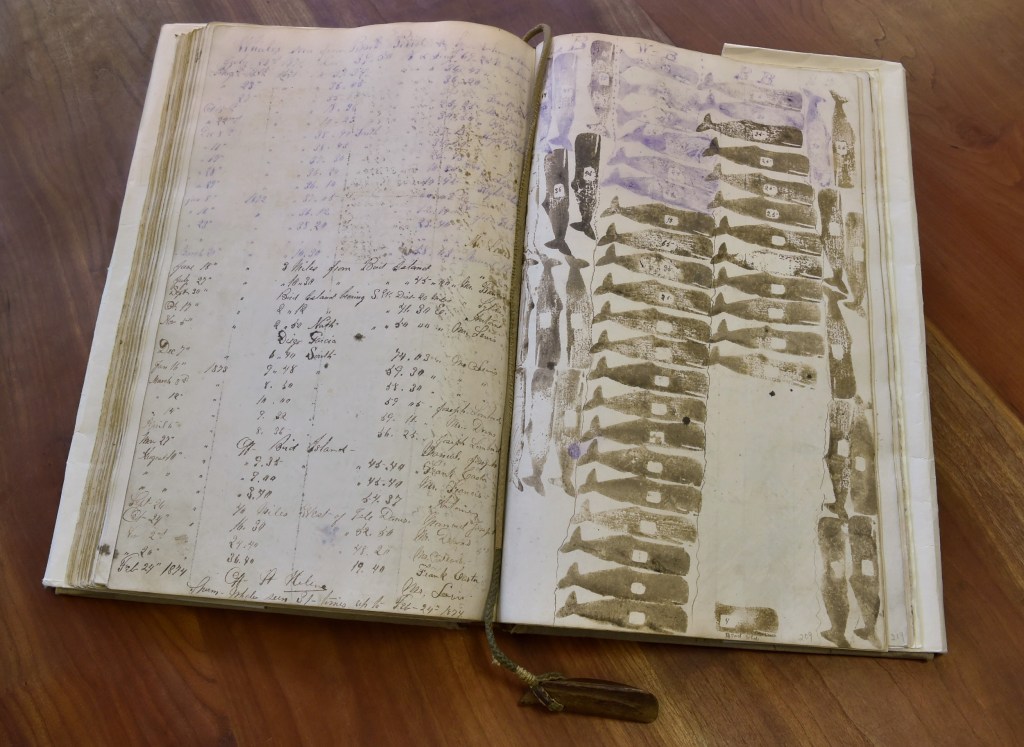
- The fascinating history of whaling logbooks and their related stamps.
- The ingenious edge-notched or McBee card system which needs a little explaining.
- So much history of data and computing in this talk I felt a little mind blown.
- Reference shared at the end to the Tangible Media Collection that I’d have never found without this talk. Worth the ticket price just for this!
- One closing though about ‘why I love paper’ hit me: ‘I was there, physically’.
Left me thinking: Humans that like data and think in data ways are amazing. I am sure there’s neurotype in there. A way that some brains think more naturally than others, and which excites them to keep thinking that way. I very sadly don’t have it, and only when data is visualised can I engage or feel interested (due in turn to my own neurotypes).
Also, while viewing all these amazing ways of recording data that Stefanie shared, the thought kept hitting me that data and logs are such important inventions for humanity. Duhh! Rather obviously, you might think, but specifically, imagine if we didn’t have paper or anyone interested in recording data and seeing patterns of any kind. If humanity had evolved with just verbal communication, guesses, and no interest in seeing and recording patterns though which to learn and reveal truths, when humanity wouldn’t exist.
Paper and data (and stories) are the emergent collective conscience of humanity. The formats on which we are able to stand on the shoulders of giants. Imperfect, like memory, as things are forgotten (data is lost or simply forgotten about with there being too much for the human brain to keep at front of mind). But assistants like Dan Catt’s Kitty that can augment us represent an enormous opportunity to reinforce that collective cultural memory.
6 more talks and 1 printmaking workshop tour to follow in more posts soon.
 Mathew Wilson – Documenteering