
Read
Comic Sans shaming is one of those things I don’t really have time for. Simon Wilson on Bluesky
I’m with Simon on this one. Not that it helps me with my dyslexia – just because I’ve always found the hate to be oddly petty. And not because I like Comic Sands – it’s just that so many others clearly do. It’s fascinating and quite sad that the design world can be so blind to this fact. Constantly preaching that this popular thing, that people use, and enjoy, and find useful, is somehow bad design.
Ten Takes: What does a well-designed website look like?
I admit to a little envy of answers by Josephine Lie and Joe Burke (specially, TLDR: it’s invisible), but still please with my own take on this! Even more pleased by the general consensus around functionality.
POSSE: Reclaiming social media in a fragmented world. Molly White
How to use walled garden platforms, without over-investing and losing yourself when they die. Or worse. Another great piece from Molly on taking control of your online output with POSSE! The one big issue though is this: “…there is not a strong software ecosystem around POSSE. Most people I know who employ the practice have written their own (typically open source) implementations… Some brave souls do it entirely or largely manually, copying-and-pasting threads across multiple services. Outside of that, options are somewhat scarce…”. I keep thinking about what a strong software ecosystem around POSSE could look like. The brilliant folk involved in indieweb.org seem most hard at work in this respect. But I’d like wordpress.com or even patreon.com to have a go at open syndication tools. Anyone know product people in those orgs?
Thomas Fuchs, on Bluesky, on claims of AGI next year
“Claiming that if we just keep feeding the calculator data will suddenly make it human-level intelligence and sentient (and indistinguishable from a human) is like claiming magic is real.” Lol. I’m still seeking as many different perspectives on AI as I can at the moment. In this thread, Thomas notes how the fascinating thing “about the AI bubble is that both proponents and opponents of it are grifting as hard as they can.” I’d count Thomas’s take following this as a third group of proponents: “Neither will happen.” I half wish I had his confidence in that stance, but the more I read, the more I realise that nobody knows. Hence the “scammer heaven” environment for talk about it.
Deep canvassing
I finally remembered this term / practice. It’s been in the back of my mind while thinking about research techniques and stakeholder management, but I couldn’t remember what it was called. Not sure if it will give any insight in those areas, but fun to consider! (Note: In research, I don’t mean to try and shift someones beliefs toward something we’d want them to believe, but rather that we could use this technique to ensure we get down to their deeper and more read needs and frustrations, rather than just top level and culturally popular gripes).
Listen
Is AI just all hype? TED AI Show with Gary Marcus
Why does AI/LLMs accuracy and usefulness seem to have plateaued? Why do we still not have reliable driverless cars? “… we got to 80% correct real fast, and then there’ve been subtle, tiny improvements… There’s this immense periphery of outliers… I don’t think we’re close to AGI, I’m not so sure we were even close to driving the cars”. I love the phrasing of ‘immense periphery of outliers’. It’s applicable to everything. A sharp truism for life that I think need to keep in mind.
The Decisions That Made Me A Leader: Martha Lane Fox
“All you can do is try and understand… by asking good questions…”. Sounds simple or even obvious, but this is succinct, honest and important advice I think. Great to hear it from someone as impressive as Martha.
How did the first democracy die? Search Engine
I found this episode oddly consoling. There’s something about learning from history echoes, that nothing much happening today hasn’t already played out in some way before. They survived making mistakes. Maybe we’ll survive making the same ones.
“No historian believes that mankind is completely irredeemable, because you would never write about the past if you didn’t think a better future was actually possible…
[Thucydides] says he want’s his work to be a possession for all time. He says ‘for those that want to know about the future, this work will be valuable’, because as long as human nature is what it is, similar things will happen again. And if you know the kinds of things that are likely to happen, you can in fact plan for them, and you can try to avoid them. It’s not that you’re likely to avoid them, but it’s possible you may…
This is to me the inherent optimism that goes along with history. Even if you have a dark view of human nature. So, I don’t think it’s possible for better things to happen in the future. And that’s one of the reasons I study the past.” Loren J. Samons.
Is AI destroying our sense of reality? with Sam Gregory
Some great conversation in here on the topic of proof of personhood. Efforts like the Content Authenticity Initiative and Coalition for Content Provenance and Authenticity (C2PA) are particularly exciting. For me the idea that institutions such as the BBC or The Guardian will have an even greater role in future as validators and verifiers of information, not just creators of it (which the BBC is already pushing clearly into with BBC Verify. Snopes has long been in this space also, but all these efforts feel increasingly, desperately important as AI generated misinformation accelerates and spreads faster than anyone can handle. We’ll need sources to look to. Not everyone will trust them of course, but we need a set that at least a lot of us do. An enormous responsibility. But there’s no way forward without it.
Also, I wondered recently if there was a gap here that LinkedIn could fill with a soft level of PoP. Some way that accounts or posts across the internet could be verified via LinkedIn and the number of real human connections. Even possibly with some tenuous suggestion of how close someone is to you or how many connections they have. I don’t see bots being able to generate hundred of bot connections without being noticed. I dunno, there’s something in it. But it does mean trusting Microsoft to create a free, public, yet private, validation tool for open use, which doesn’t feel like their style.
What really went down at OpenAI and the future of regulation w/ Helen Toner
“My biggest suggestion here is just not to be intimidated by the technology. And not to be intimidated by technologists. This is a technology where we don’t know what we’re doing. The best experts in the world don’t understand how it works. And so, if you find it interesting, be interested. If you think of fun ways to use it, use them. If you’re worried about it, feel free to be worried. I think the main thing is just knowing you have a right to your own take on what you want to happen to the technology…” A great interview throughout, not least for what Toner reveals about what happened at OpenAI when they tried to oust Sam Altman. This big quote from her comes at the end though, and packs a lot of truth about new technology, not just AI, and how people act like they understand and know what’s what. Everyone’s just making it up as they go along. Altman in particular, it seems. What a shame Toner’s influence has been lost from OpenAI.
Does everyone have different mind’s eyes, mind’s ears, and mind’s tongues? Inner Cosmos, David Eagleman
“There’s a great deal of internal variety of experience, much more than many of us would naïvely expect… all you can ever do is introspect on what your experience is like… We all tackle the tasks of the world given the tools that we have… And not just our brains, but our bodies. We have different genetic programs that unpack different bodies… some taller, some shorter… some people are good sprinters, others are good in marathon runners, and on and on. But for the most part, all bodies just say “Cool. I’ll figure out how to use the machinery of the world”. Chairs and cars and bicycles… some people have advantages [think, genetically unique world record breaking athletes], but for the rest of us we cobble together our many different skills to manage our tasks in the world. And this is the way that we all find our way through the mental landscape. Whether you are someone who has internal visualisation like a movie or instead just has concepts. You can both do art. You can develop different approaches… so when we talk about neurodiversity, it goes deeper than you think. Quite possibly, we are each a minority of one.”
A long passage to quote, but I can’t get enough right now of people exploring and realising the massive diversity of cognition. I think it represents an enormous opportunity in developing new ways of working together to create more interesting outcomes. Even greater, some new routes to better mental health and acceptance of each other and ourselves. Getting away from the idea of normal. And into Eagleman’s view that we’re each a minority of one. It’s becoming unbelievable we managed so long under the illusion of there being a dominant ‘normal’.
Listen/Watch
… the toxic culture of YouTube
“There are days when I think I’ve sold my soul to the mechanisms of the YouTube algorithm. The structure of this place may be at odds with genuine creativity”. A rather succinct, semi-existential reflection from this video… that the algorithm fed me. That’s the crux of the problem though: Platform algorithms produce both great and toxic outcomes, which is part of what I think makes them feel abusive. Or like being gaslighted.
What can Doughnut Economics learn from History?
“Social philosopher Roman Krznaric and renegade economist Kate Raworth explore how we can survive and thrive by looking to the past for clues on how to build more regenerative economic frameworks”. I like the idea of history similes, and this is a great way to use it. Proving that things can be done, because they’ve been done, and that what we have now isn’t the only way. I keep meaning to re-read Doughnut Economics also so this was a welcome reminder of Kate’s work.
Watch
How a dental technician became the master of modern (Manga) horror
Don’t click if you don’t want to see some really quite scary illustrations. Mattt’s video essays are fantastic. I linked to another one last month. In this, he goes into the history of an artist and style that’s not quite my cup of tea, but his videos are that good I still had to watch. This one reminded me of something I learned a little bit about. Researching what the recurring conventions in Manga and Anime mean. This Manga iconography is a good start for that (and includes the ‘Cruciform popping veins’ convention that first got me wondering). In this video Mattt explains the clever Manga trick of using simply styled faces to effectively cause more reaction from the reader. Allowing them to project themselves into the character and the emotion, when it’s more iconographic. If it’s too lifelike, we can find it harder to relate to and empathises with. So goes the logic. A clever trick that I wish was used more in American and European comics.
Concept trailer for animated horror project. Rodrigo Goulão de Sousa
Warning! This is properly disturbing. Absolutely amazing work though. So much world building in less than a minute. Their other work is equally impressive and scary. Reminds me of seeing the Adventure Time pilot before it had been commissioned. Seemed like a no-brainer to make a series. Hope Rodrigo has the same fortune.
Look
A Brief History of Posting Webcomics. DESIGN THINKING!
A concise social media and digital product history lesson from DESIGN THINKING! Anthropomorphising platforms and their incessant threatening of creators is so apt. And the last panel is so depressingly true. I mean FUNNY! Click the link!
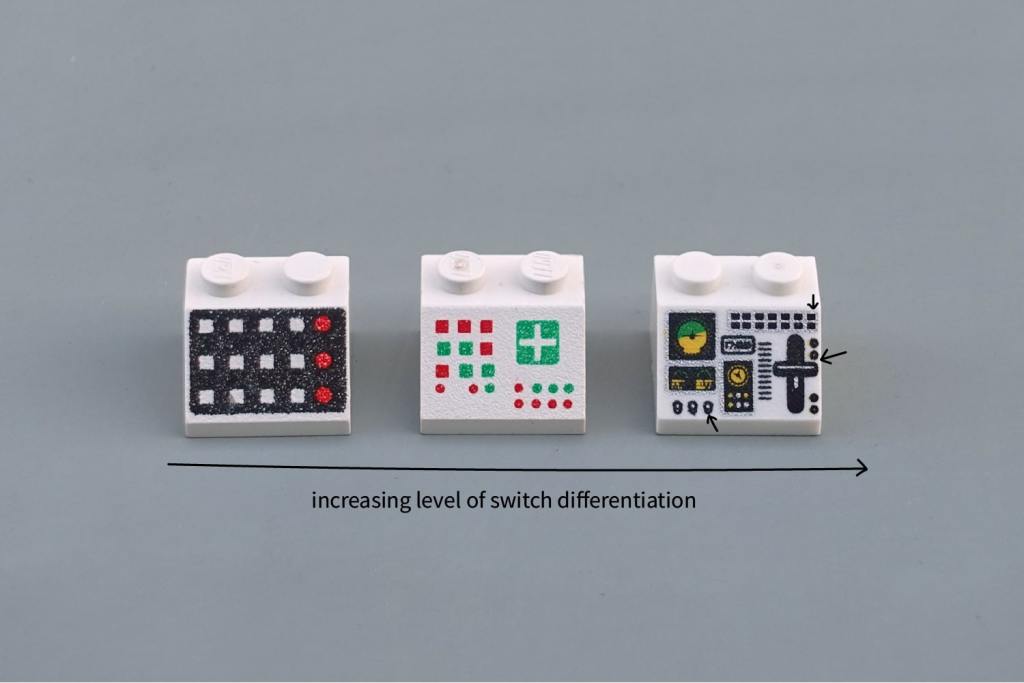
The UX of LEGO Interface Panels
I remember this going around a while back but I only seem to have posted a single image of it. Such a brilliant piece of analysis and essay writing.
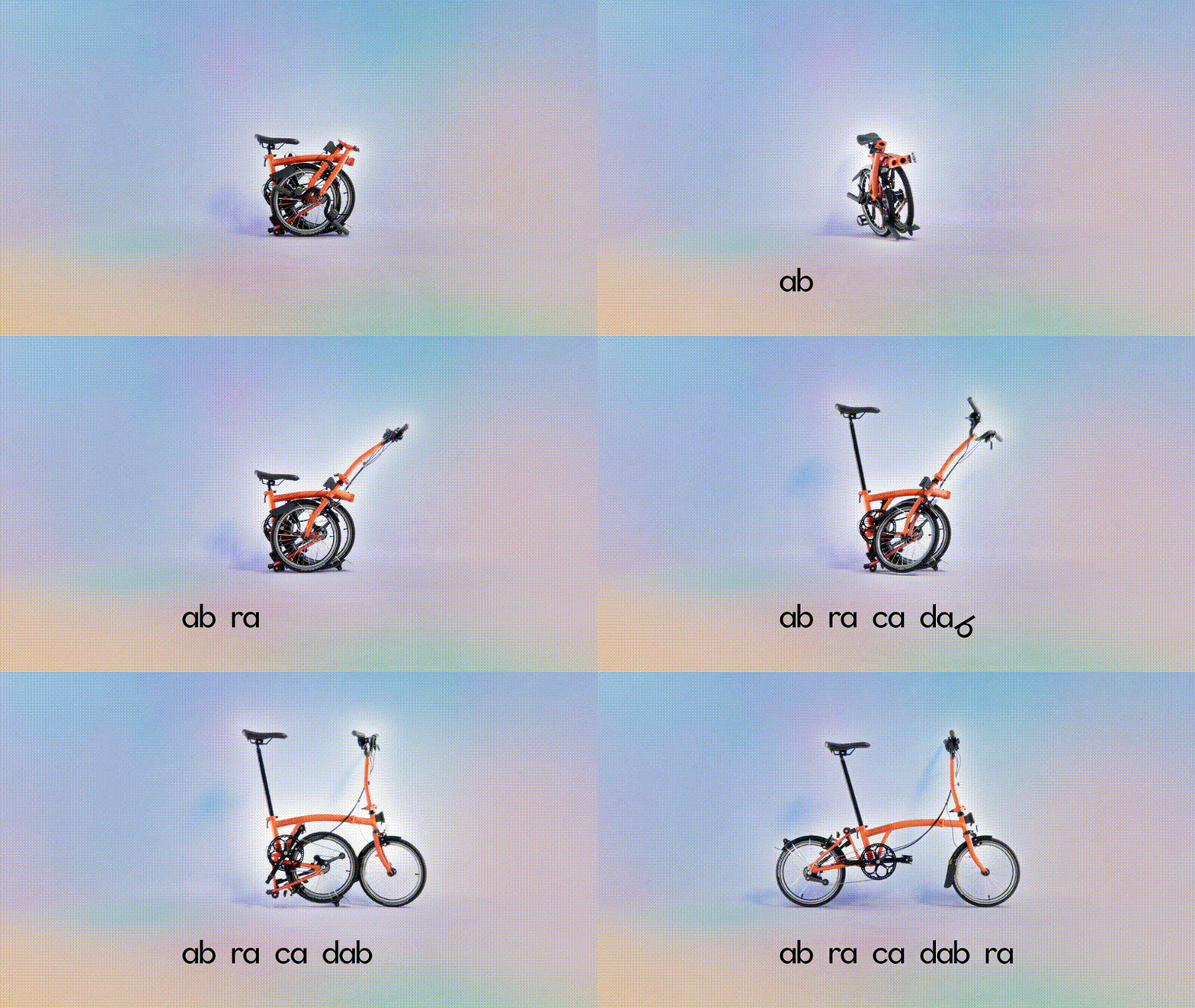
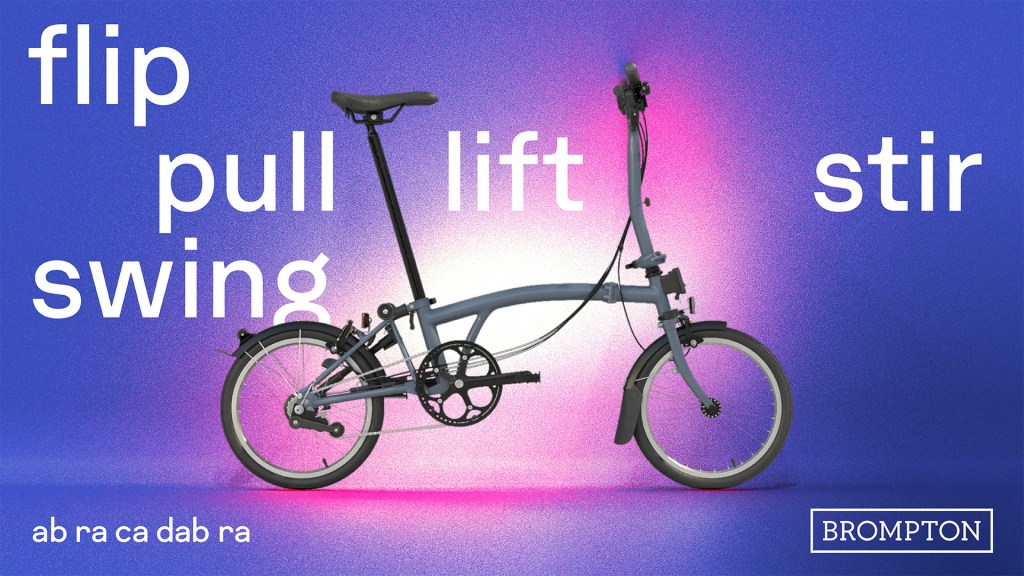
Magic in five steps: Studio Blackburn and Co. for Brompton
Brilliant work bringing Brompton to life. These animations perfectly capture the joy of owning one. I can never resist making little swhoosh, flip, bop type noises when I unfold mine. Takes me back to playing with Transformers. Chee-koo-chuk-koo-chuk!
Use/Buy
Quiet posters via Guy on Bluesky
“Surfaces posts from people you follow who don’t post very often”. Just what I wanted. As while the growth of Bluesky is exciting, it’s drowning out some of my favourite more quiet voices.
DebunkBot: Conspiratorial Conversations
I really want to spend more time with this. Such a brilliant idea, and it sounds like it’s proving surprisingly effective. Just need to find someone willing that believes in a popular conspiracy (or try harder with my own experiments to play act like I do).
How to set a goal. Julia Whitney. Haudoo!
Lovely to see this format and Haudoo! doing more. Following How to do presentations as I’ve written about before (which is now out of print). Get them while they’re hot. Including, hot potatoes
Want
Design Leadership Chronicles. A graphic novel about organisational change. Marzia Aricò
“This graphic novel tells the stories of design leaders who have used design to transform the way their organisations create products and services for their customers. It inspires readers on how to instigate meaningful change within large organisations.” This looks really intriguing. Would love to take a look.
 Mathew Wilson – Documenteering