
Utilitarian Poster Rearranged
I’ve been revisiting the work of Daniel Eatock (co-creator of indexhibit.org) and found this poster of his from 2010. Way before all the capital DS Design System excitement. While the poster is more of a pattern than a design system, it just hit me as a nice expression of what we’re aiming for when we talk about designing systems. Recognising repeating patterns (in this case mostly content patterns), and setting them up in ways that save time when replicating. Love also that this poster still leaves so much space for individuality. A system that could enable effective creativity rather than stifle it.
If Russell Ackoff had given a TED Talk (Beyond continual improvement)
I keep revisiting this video (from 1994), and an article titled A Lifetime of Systems Thinking, and an effectively condensed version of both in the form of this Ackoff quote list from John Cutler. Some of the most conscious and compelling expressions of the importance of system thinking that I’ve ever seen. I’m still struggling to process how in 30 years since this talk, so few people think and talk this way. I’m basically head scratching at the moment, as to why and how so many clear and good old ideas have become so muddied and convoluted in recent years. It’s like there’s an invisible pandemic of busy work and over-complication. Maybe we’ll have a fantastic re-simplification rebellion at some point soon, and all this noise is just a necessary catalyst to ensure everyone is receptive to clarity and effectiveness.
What can we learn about teaching from John Oliver?
The phrase ‘What can we do?’ (as in, actually do, and do effectively) has joined all my other internal monologues of late, so I was pleased to hear in an interview with John Oliver something that I hadn’t noticed from watching his show – that they basically have a two step formula. 1) What is the problem? And 2) What can we do about it? I found the article linked here when looking to see if anyone else had noticed the pattern. It’s a better breakdown than I could have done so I refrained from trying my own version.
A map of every road sign in the Netherlands
Zoom in – That blue alert box says ‘You need to zoom in further to see the road features on the map’. Found via Tom Scott’s newsletter, this one resonates with my growing interest in road signs, from both an effectiveness point of view, but almost as much from an infrastructure point of view. Amazing to think and so clearly witness the data and organisation that goes behind all the signs in a country. It makes me imagine also how much money there must be in the sign making industry! (Interestingly also, I drive and see thousands of signs all the time, so I should know there are loads, but this map still really shocks me. There’s something in that, about what we see but remain mostly unaware of on mass).
Automation and the Jevons paradox, by Tim Paul
‘If you’ve ever heard someone say “If we automated X, it would free people up to do Y”, and thought 🤔’. An old post I only recently came across via Cathy Dutton on Bluesky. I’m new to the Jevons paradox, and while it’s a bit of a mouthful on the wikipedia page, I think Tim’s description is great: ‘It describes how energy efficiency gains can often lead to more energy usage rather than less.’
Why there is no such thing as a ‘normal’ brain
I continue to dip into research and opinions on this topics and was surprised not to have come across this BBC piece before. ‘Ultimately, we all share some core systems, but beyond these our brains are as familiar yet as varied as the stars in the night sky’. A great way to put the reality of our enormous diversity against the common feeling that there is a basic and majority of ‘normal people’.
What Happens in a Mind That Can’t ‘See’ Mental Images
Another good article on aphantasia (the inability to see images in your mind), which I note is possible now in the macOS dictionary as it no longer had a red-correction-underline for me, unless I already added it myself. I like here the mentions of hyperphantasia which I feel I’m more on the side of, and to a distracting extent. But also the line that ‘they’re finding that aphantasia is not a disorder — it’s a different way of experiencing the world.’ More support to there being no ‘normal’, which the piece even goes on to say.
How to stay curious while avoiding distraction
Sometimes I feel like Tim Harford is writing directly to me. But this time I’m even more fond of his wife and her reasoning for why their son sometimes fails to complete tasks:“He gets distracted because he’s so curious,” Love it. Wholeheartedly agree. But yes, as the piece goes on: ‘Yet surely there is a distinction to be teased out between the essential trait of curiosity and its evil twin, distractibility.’
Hire HTML and CSS people
‘Every problem at every company I’ve ever worked at eventually boils down to “please dear god can we just hire people who know how to write HTML and CSS.”’ This comes to my mind every time I encounter terrible but basic web UI. It seems so obvious, yet so few people still value (maybe now even less than ever) the skills of good HTML and CSS people. Maybe I was just lucky to have know and worked with so many, but surely, other website and product owners can see their awful and busted bits?
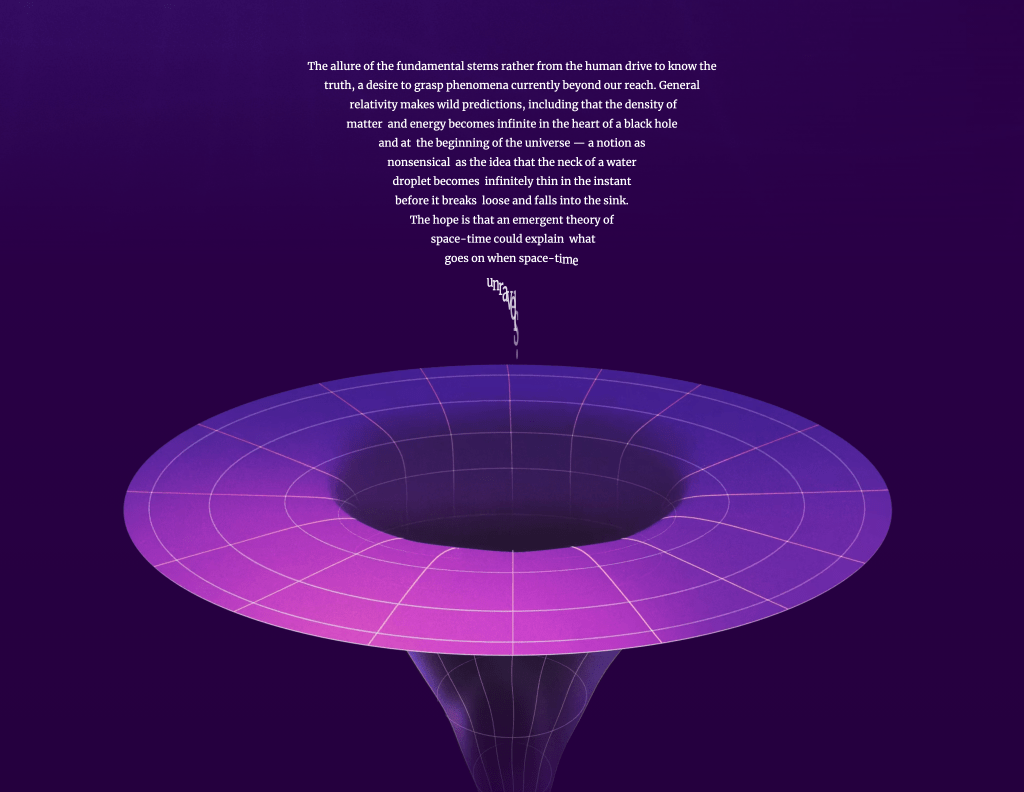
The unraveling of space time
What a wonderful webpage. Don’t see many like this anymore.
The University of Dyslexic Thinking – DyslexicU
This one has me thinking, but maybe not in the way they want. Or, maybe exactly in the way (being dyslexic)!. It just seems like a narrow way of thinking in a time that we’re expanding our awareness of neurodiversity and difference being a good thing. To put some stakes in the ground and cordon off ‘dyslexic thinking’ as a single avenue, and then to claim so many quality to being emergent of just dyslexic characteristics, is I think, a bit narrow minded. I need to read more into it, but NeurodiversU would have been cooler imo.
New California law requires one-click subscription cancellations
A fantastic idea. Caught my eye while I was in the middle of the Endineering course. The main way we’re going to get better endings is if policy puts some pressure on also. Like Extended producer responsibility and the 7 day Current Account Switch Service (CASS) which most banks now seem to pitch as though it was their idea and something they’re happy to offer!
What have you lost?
Spotted this on a train and had never seen before. Looks to be an independent org that’s working with anywhere that customers might lose things. A great idea. Wonder if it works. Crikey! Quick test and it looks like it does! (At time of posting, that link showed a list of 8 umbrellas lost on GWR trains for 8 October alone).

