
Follow
↗ The Outline newsletter from Design Week.
There are too many newsletters I feel (though I understand why), but this one is brilliantly done by Design Week. A daily update of interesting snippets that’s not overwhelming due to its concise and well written format. Along with design thinking, it’s become one of the newsletters that I genuinely look forward to getting.
Read
Maggie Appleton on AI truthfulness and Humanity’s Last Exam.
A welcomed level head, and and effective authority (far more so than a lot of folk I see confidently professing their opinions), when thinking and talking about AI hallucinations and what not…
When people make sweeping statements like “language models are bullshit machines” or “ChatGPT lies,” it usually tells me they’re not seriously engaged in any kind of AI/ML work or productive discourse in this space. First, because saying a machine “lies” or “bullshits” implies motivated intent in a social context, which language models don’t have. Models doing statistical pattern matching aren’t purposefully trying to deceive or manipulate their users. And second, broad generalisations about “AI”‘s correctness, truthfulness, or usefulness is meaningless outside of a specific context.
Bad design is (still) bad for the planet (and somehow this is still news). A chat with Don Norman.
I found this older piece on Design Week while browsing their UX related posts. It says nothing that I’ve not already thought a lot about myself. And a big reason such thoughts are so saliently in my mind is due to the work of Don Norman, not least his book The Design of Everyday Things. Reading these thoughts again, when they are still unknown to so many, and still so needed, I couldn’t help but wonder how Norman feels about having banged the same drum for so long, with at times, seemingly so little effect.
Government funding withdrawn from UK-wide parking app.
This news came out a while ago and was shared a lot, but a deeper dive into it has failed so far to escape my drafts. In short, I’m fascinated in this story, and the duality of my response as a citizen and UX designer. Firstly, frustration at the fact they spent 5 years of funding, and didn’t get it done. And secondly, oh my days, can you imagine how hard this would be to actually realise and make happen! The complexity of the task is practically invisible whenever you interact with a parking app in the wild right now, but give it even a smidgen of systems thinking and the intricacies hit like nightmare fuel.
Running a meeting is easy! they said. Just use an agenda! they said.
As an increasing evangelist for meeting agendas, I felt a bit defensive starting this piece by Dr Carrie Goucher, with its first line stating that ‘agendas don’t work!’ Thankfully, it was intentionally provocative, and the argument is a lot more nuanced – and once again – more a matter of semantics and shared understanding. In particular, a shared understanding of the actual purpose of a meeting, which amazingly to me, is one of the most common details missing from most. Via Ash
Public services for a digital age. The Next Generation.
I’ve still not read Platformland: An anatomy of next-generation public services, by Richard Pope. All I hear are good things though, and this is another great review, from James Plunkett. All that said, I can’t shake the feeling that a lot of what is being said is just a new framing of what we’ve been saying for years. This is by no means a criticism of Richard’s work (again, I’ve not actually read it yet, only many reviews). I’m more just exacerbated by what seems to be a never-ending need to repeat the same basic ideas to successive governments and ministers. For the second time this week, I’m thinking of generational amnesia and its startling ability to delay progress.
↗ Should we change how design is costed? Licence agreement for identities?
Love this sort of thinking. A way to cause thought about how the industry operates, rather than carrying on, like the way things are is a natural and unchangeable order. We need more ‘what if?’ thinking like this. After all, that’s what design is for FFS!
‘Teachers said I’d fail but dyslexia gave me drive.’
“Oliver said recently he believed the system was “too slim” for dyslexic and neurodivergent children, and there were “too many kids falling through the cracks”.” 40 years after I was lucky enough to get an early diagnosis, it’s bonkers that this is still the case.
Stop serving shit sandwiches.
“I’m giving you these comments because I have very high expectations and I know that you can reach them.” I found this old 2016 piece from Adam Grant when looking for the exact phrasing of this strategy that I’ve heard him reference a ton of times. From there, I found the origin of the phrase is a 2013 study titled Breaking the Cycle of Mistrust: Wise Interventions to Provide Critical Feedback Across the Racial Divide. Over a decade and Grant is still having to frequently repeat this advice. I don’t know why but this hit me as a particularly sad example of how slow cultural learning and change are. Highly related to the above piece on dyslexia also.
↗ Duolingo Renamed UX to… never mind. It doesn’t matter.
This new has been shared around a lot, so while I think it’s an enormous nothingburger and total distraction, I felt I had to document my distain! I’m with Jared Spool as quoted in the article saying “we have the name ‘user experience’ and have spent those 30 years promoting it. So I don’t like changing it.” It looks like an attempt at an org and some leaders within it, trying to set themselves apart as innovators with something new to say. The industry needs to be focusing more on shared definitions than trying to originate new terms that only add more ambiguity. Just let UX designers know (or remind the older ones) that they should contain business and product-like perspectives alongside their focus on user needs and accessibility, and move on.
↗ Design is not dead.
But I wish clickbait titles proving Betteridge’s law were. These responses from Peter Merholz on the recent Fast Company engagement bait piece are pretty much all on point. In particular his last point stating, “It’s time for big-D Design to emerge. A reason Design suffers is its narrow silo-ing into marketing, brand, product, UX, packaging, strategy, etc. Design is at its most potentially impactful when weaving a coherent end-to-end experience. We have more in common than in distinction, and by joining forces, we can drive beneficial transformational change.” Feels very related to the Duolingo link above. Design works when done with awareness of the systems it’s part of, and that it’s uniquely capable of influencing. If not practiced in a decorative and theatrical silo – in which time is wasted on renaming things all the time – then design is basically essential.
Listen
Collaborative development of AI policy at Art Fund.
More great insight from Ash and this time his guest Mike Keating of Art Fund. While I’m technically not that close to be writing policy within an arts charity there is a lot in this but really resonated. Approaching an unknown subject, that many are nervous about, and how to collaboratively design an adaptable solution that address it honestly and practically. A good listen for anyone working in design leadership or delivery imo.
Listen/Watch
Fragile masculinity case studies.
It might just seem like a jokey video or a ‘liberal leftist takedown’, but this contains a lot that’s worth refracting on imo. At least, an active and compelling call for us to stop using the ‘toxic masculinity’ term that’s burdening young men. They shouldn’t be blamed and berated for the history of their gender. Fragile masculinity instead frames the growing issues with men – essentially the issue with their mental health and identity – more as the result of a messed up and dysfunctional culture construct. One that’s less the fault of all men, and more something they – we – all have to identity and learn to support in healthily supporting and redesigning.
Why we WORK so much.
I really enjoyed this video essay. The YouTube / Google algorithms did very well in recommending it, as it hits a load of areas I’ve been reading and researching. In particular the protestant work ethic, and the whole protestant thing! I’m not at all religious and my RE classes left little mark in my memory. If only RE was taught more in a cultural, historical and philosophical context, I think I would have engaged more and better understood its importance, beyond what I saw as its oppression and deprivation.
The myth of Sisyphus.
I’ve not been able to get Albert Camus’s myth of Sisyphus out of my head since learning about it not too long ago. When sharing the idea with someone else recently I came across this succinct little video on both the origins of the myth and Camus’s own take.
The vivid image of someone condemned to endlessly repeat a futile task, has resonated as an allegory about the human condition… compared the punishment to mankind’s futile search for meaning and truth in a meaningless and indifferent universe. Instead of despairing, Camus imagined Sisyphus defiantly meeting his fate, as he walks down the hill to begin rolling the rock again. And even if the daily struggles of our lives seem equally repetitive and absurd, we still give them significance and value by embracing them as our own.
Defiantly meeting our fate! Such a brilliant take. Also, if you want the video from the start, you might learn like I did that Sisyphus was quite the arsehole before his punishment!
Watch
↗ Asking men the questions women deal with every day.
An absolutely brilliant idea for International Women’s Day. Pay attention to the guy that’s asked about his shoes. Note his reaction. I detect a mix of confusion and general frustration with what he interprets as an inappropriate and insulting question. Then check his reaction when asked a more serious and worrying question later on.
Cleaning Supplies are Extremely Stupid.
My household has the same perspective. We’re still in the process of switching out old harmful and wasteful cleaning products, and testing seemingly better options such Miniml, but goodness gracious, bless Hank Green for taking that personal frustration and turning it into a not-for-profit ‘EcoGeek cleaning supplies subscription service for the eco-conscious home’. Whether it’s a perfect and totally ‘eco’ solution to the harmful and wasteful cleaning products issue, I don’t know. But it sure is a damn good effort that’ll have a more postiive effect than the rest of us just moaning about it. Also, a lovely response video from John green, expressing pride and support for his bothers many ideas and initiatives. These guys seem to me to have channeled their ADHD and related energy filled neurodivergences in the best of ways.
Promoting people to their level of incompetence.
A third point following the theme above in the dyslexia and shit sandwich links, of ‘how can we not all know this by now and have made any progress in changing how things work’. This is the good old Peter Principle again, but this link is shared also because the 1974 BBC music and graphics are so amazing! The one at 3min 50sec is my fav I think. But 4min 50sec as an existential charm.
Look
I didn’t know Pictures on Walls had called it a day.
Happened in 2017 apparently. “POW was started in 2003 by a loose collection of artists, graffiti writers and illustrators who were shunned by the controlling influencers of the day – so we set about producing and distributing our own art… However, inevitably disaster struck – and many of our artists became successful. Street Art was welcomed into mainstream culture with a benign shrug and the art we produced became another tradeable commodity. Despite attempts at price fixing regrettably some POW prints have become worth tens of thousands of pounds. Either unable or unwilling to become part of the art market we once so self-righteously denounced – we called it quits.” Some classic prints in the archive they’ve left on their site. I remember many at the time, and against their mission to feed the thing that caused them to close, I don’t half wish I could have afforded some of these at the time, as it would have been a lovely investment! As with the problem their mission is against thought, you need money to make money, and at the time I just needed money.
How do we actually change the culture of time wasting and theatrical meetings?
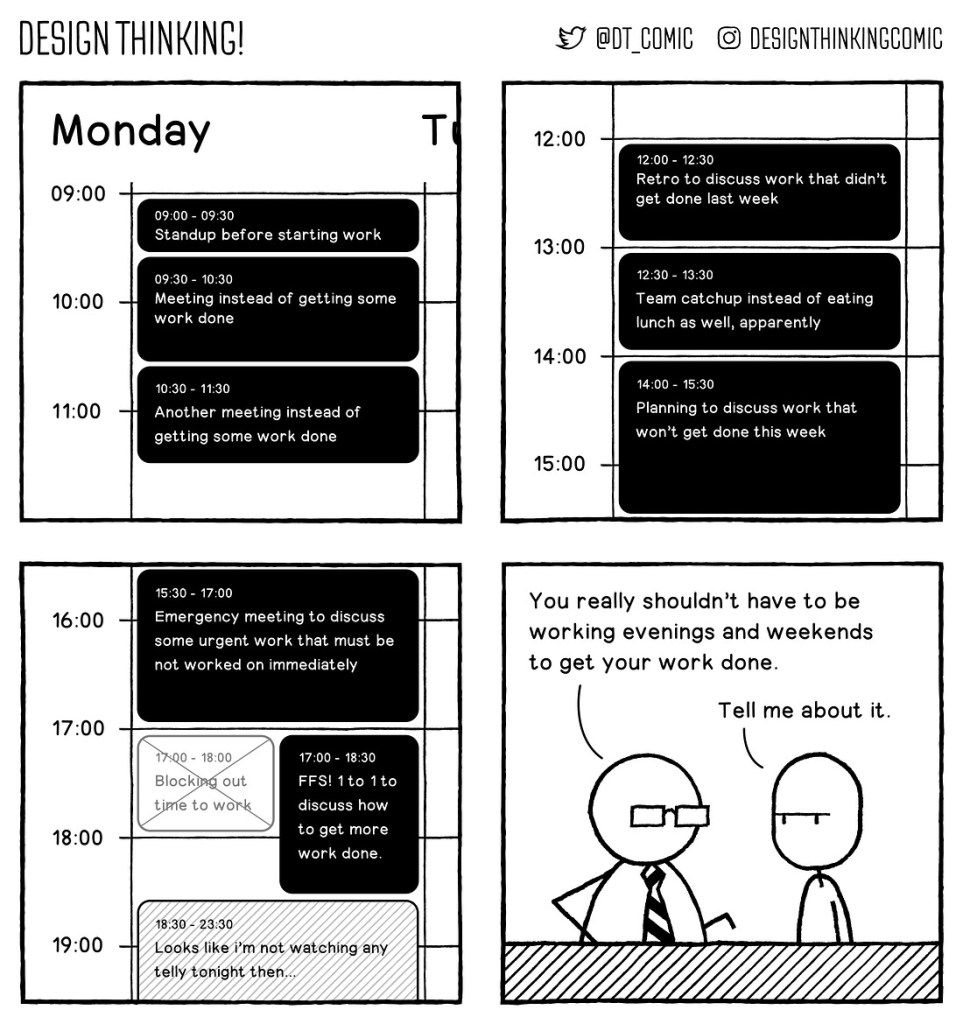
We all find this familiar. It’s such a well known and common moan and frustration. But what’s the actual cause? Or what might actually remedy it? I think it’s a culture issue, and that culture is fostered and influenced by leadership. Do leadership not see this issue then? Or maybe because their work days are about meetings and guiding people and teams, do they lose the ability to realise or remember that other people need actual work time? This collection of ‘things I…’ is going more in the direction of “… found bafflingly frustrating and still unbelievably relevant”.
Learn
Use words. Not too many. Mostly short.
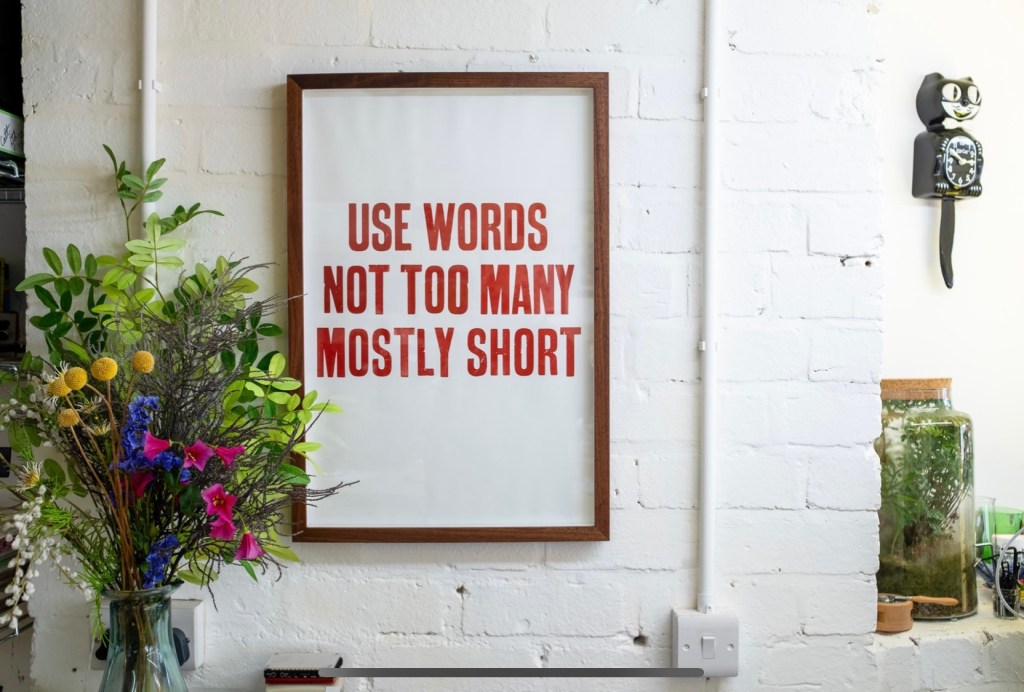
Bloody love this. ❤️
Use
Super lightweight and lovely digital postcards.
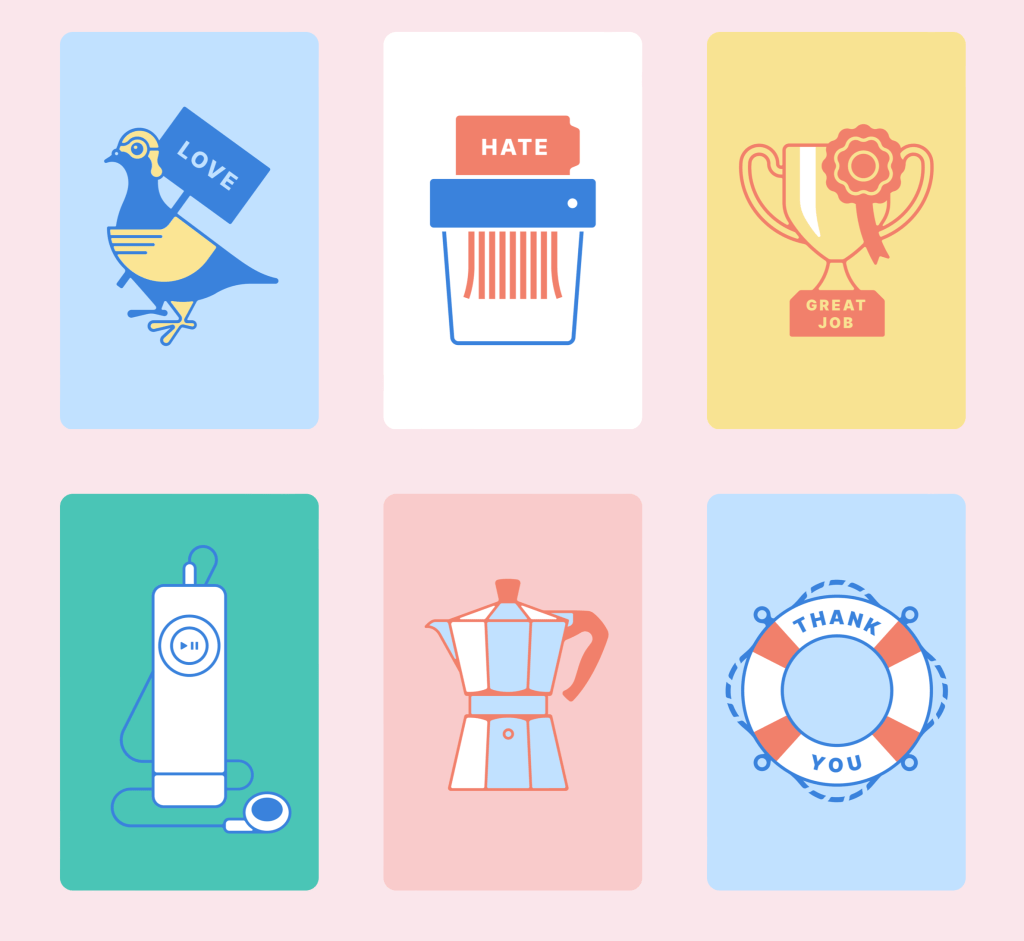
A another lovely project from old friend Rob Bartlett. A wonderful harking back to the days when people cared about efficiency and load times, carefully crafted, considered, and refined graphics, and building things that you can just use, rather than having to create an account for and locked into the ecosystem of. ⭐
Recommend
Interesting 2025 – A wonderfully inspiring yet deeply unassuming event.
Realised it’s just two months to Interesting conference. Very much looking forward to it. If you’re unsure what it is – but you’re curious – then it’s 100% for you.
 Mathew Wilson – Documenteering